

the situation in south-kivu
The Democratic Republic of Congo has been the scene of one of the deadliest conflicts since the Second World War. More than six million people have lost their lives and millions more have been forced to flee their homes.
Fuelled largely by greed for the country's vast mineral resources, the ongoing violence has caused immense suffering, affecting women and children in particular. Sexual violence has been used as a deliberate strategy of war by armed groups.
Since the mass arrival of refugees following the 1994 Rwandan genocide, the eastern part of the country has been caught in a spiral of recurring violence. Although the First and Second Congo Wars officially ended in 1997 and 2003, armed groups such as the M23 continue to destabilise the region. Despite several peace agreements, the root causes of the conflict – notably poverty, exploitation of natural resources and weak state institutions – remain, keeping eastern DRC in a state of near-permanent insecurity.
[Source: Understanding the Genocide in the Congo War | Panzi Foundation]
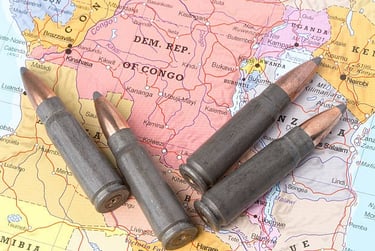
the context
2003-2025
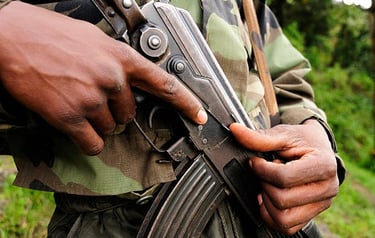
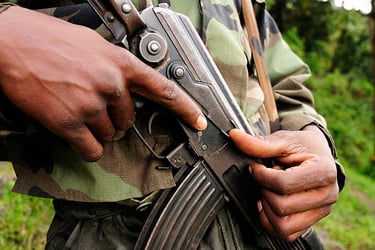
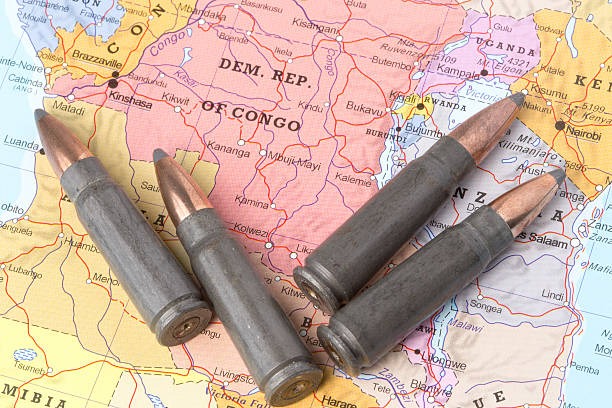
After the official end of the Second Congo War in 2003, the Democratic Republic of Congo did not enter a phase of genuine peace.
Violence continued mainly in the east of the country, where numerous armed groups continued to fight each other for control of territory and resources.
As the International Rescue Committee report shows, the post-conflict period was marked by extremely high mortality, due less to direct combat than to the indirect consequences of war: massive population displacement, collapse of the health system, malnutrition and preventable diseases. Thus, despite the formal end of the conflict, chronic insecurity prolonged the humanitarian crisis in the following years.
Between 2010 and 2025, this persistent instability led to the resurgence and restructuring of armed groups, particularly in the provinces of North Kivu, South Kivu and Ituri.
Movements such as the M23 and the Allied Democratic Forces contributed to new waves of violence, leading to massive civilian displacement and exacerbating regional tensions. The state's inability to ensure security, combined with structural poverty, exploitation of natural resources and regional interference, prevented any lasting pacification.
In 2025, eastern DRC remains marked by persistent conflict, inherited both from the past war and from deep-rooted causes that have never been resolved.
[Source: 2006-7congomortalitysurvey.pdf]
175 000+
11
Territories where RENAF operates
Beneficiaries
Since January 2025, South Kivu has been facing a persistent humanitarian, security and social crisis, marked by armed conflict, bombings, mass population displacement and recurrent human rights violations.
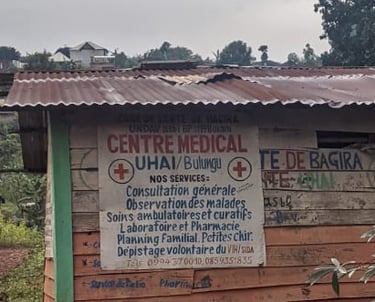
These events have revealed the fragility of the rule of law. Schools and health centres have been damaged, looted or closed, limiting access to education and healthcare. At the same time, internally displaced persons and host families are the most affected by epidemic diseases such as Mpox, cholera, polio, measles and HIV. These epidemics are exacerbated by inadequate water, sanitation and hygiene services.
Women, children, persons living with disabilities and survivors of violence remain particularly vulnerable, facing high needs in terms of health, nutrition, protection and psychosocial support (PSS).
Gender-based violence (GBV) remains a concern, while social cohesion, peaceful coexistence and restorative justice are fragile. There is a community desire for reconciliation and social reconstruction, requiring integrated and inclusive support.
[Source: ASBL Renaissance Africaine]
since 2025
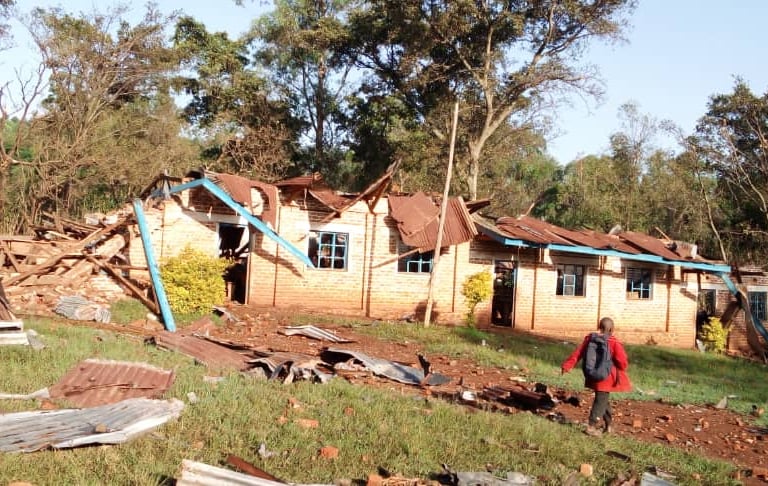
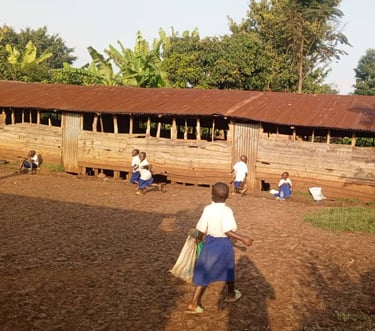
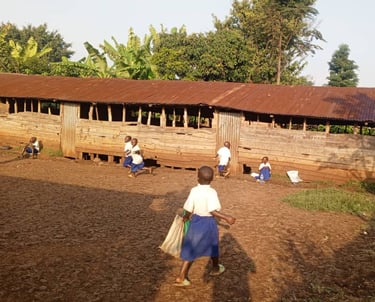
Munanira Primary School in Kalehe (capacity: 2,400 pupils), bombed in February 2025
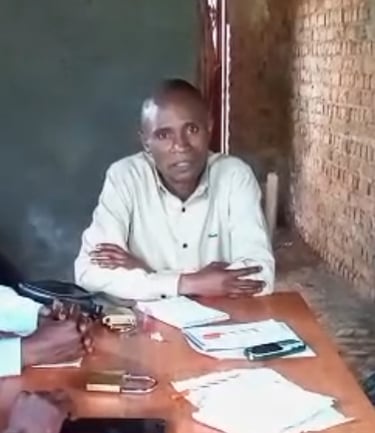
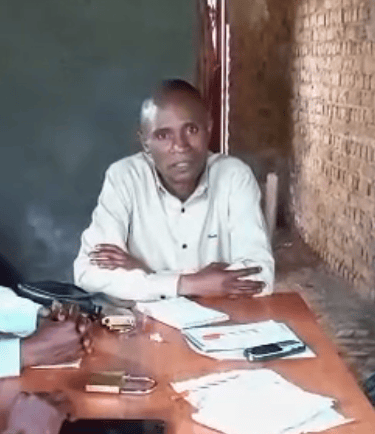
"Personally, I decided to join RENAF with a single goal in mind. Humanity is experiencing atrocities with repeated wars, so I took the initiative to adhere to the philosophy of RENAF in order to
to alleviate our patients' suffering in some small way. Among our clients are our brothers, sisters, parents and children.
Without going any further, when you are considered a red zone, like the village where I was born, when you are abandoned to your sad fate and you are the victim of these atrocities, without psychological, economic or social support, it motivates you to act."
- Justin MUNGAZI MITIMA, (Psychologist)
learn more about the situation in drc
The ongoing conflict in the Democratic Republic of Congo remains one of the world's most serious humanitarian crises. Numerous armed groups continue to exploit the country's abundant mineral resources, fuelling a cycle of violence and instability. The resurgence of armed movements such as the M23 has displaced millions of people, exacerbating an already extremely precarious humanitarian situation.
More than half of the population now lives in crisis conditions, without guaranteed access to basic necessities such as food, healthcare or education. As clashes intensify, the country's social cohesion is breaking down, exposing entire generations to violence, poverty and lasting insecurity.
gender based violences
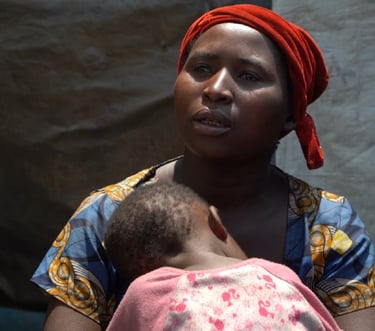
In 2023, the United Nations recorded approximately 123,000 cases of gender-based violence across the entire Congolese territory. In January 2024 alone, more than 10,000 cases of sexual violence were reported in North Kivu province, illustrating the persistent scale of the phenomenon.
Source: Human Rights Watch, "RD Congo : Escalade des violences sexuelles liées au conflit"
forced displacements
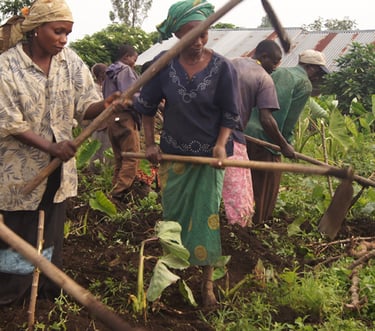
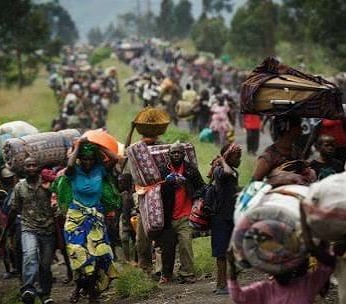
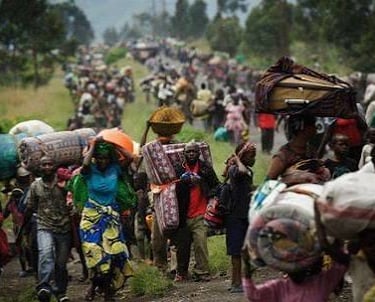
The Democratic Republic of Congo currently has more than 7 million internally displaced persons, making it one of the largest internal displacement crises in the world.
Source: International Rescue Committee,
food insecurity
children
health crisis
Over 25 million people, approximately a quarter of the population, are currently facing acute food insecurity.
Source: IPC_DRC_Acute_Food_Insecurity_Jul2024_Jun2025_Snapshot_English.pdf
Nearly 4.5 million children suffer from acute malnutrition, particularly in regions affected by armed conflict.
Source: IPC_DRC_Acute_Food_Insecurity_Jul2024_Jun2025_Snapshot_English.pdf
Armed conflict and population displacement have deprived more than half of the population of adequate access to healthcare, with medical infrastructure and resources frequently destroyed or diverted by violence.
Source: Appeal - Democratic Republic of the Congo, WHO, 2024
Contact us
renafsudkivu@gmail.com
+243 978 433 455
© 2026. All rights reserved.